Choose luxury vinyl plank (LVP) for kitchens, bathrooms, laundry rooms and basements, because new vinyl products are waterproof. Choose laminate for dry living rooms, bedrooms and upper floors, where its thicker, firmer plank feels more like wood underfoot. Installed prices overlap: HomeGuide lists laminate at $4 to $14 per square foot and luxury vinyl at $4 to $16. Many homes end up with both.
When homeowners in Baltimore, Towson and Owings Mills ask us about new floors, the question often comes down to two products that look alike in the showroom: laminate and luxury vinyl plank. Both give you a wood look for less than hardwood, both click together as floating floors, and both come in hundreds of colors. They behave very differently once water, a concrete slab or a busy kitchen gets involved.
This guide compares the two using published cost and lifespan data from HomeGuide and Angi, plus what we see on installations in Maryland homes.
Laminate has a core of high-density fiberboard, a wood-based panel, with a printed photo layer and a clear wear layer on top. Because the core is wood fiber, standard laminate can swell if water gets into the seams. Laminate is graded by an abrasion (AC) rating; a higher rating means it holds up to more foot traffic.
Luxury vinyl plank is built from layers of vinyl, often over a rigid stone-plastic or wood-plastic core, with a printed layer and a wear layer on top. The wear layer is the main thing that separates a budget plank from a premium one, and Angi notes that vinyl plank pricing rises with wear layer thickness.
| Laminate | Luxury vinyl plank | |
|---|---|---|
| Installed cost (HomeGuide) | $4 to $14 per sq. ft. | $4 to $16 per sq. ft. |
| Material only (HomeGuide) | $1 to $6 per sq. ft. | $2 to $10 per sq. ft. |
| Water | Water resistant; only some products are waterproof | New vinyl products are waterproof |
| Thickness (Angi) | 6 to 12 mm, with a cushioned feel | About 5 mm on average |
| Lifespan (HomeGuide) | 10 to 25 years | 20 to 50 years |
| Best rooms | Living rooms, bedrooms, upper floors | Kitchens, baths, laundry, basements |
This is the biggest difference between the two. HomeGuide says all laminate is water resistant but not all of it is waterproof, while all new vinyl flooring is waterproof. Angi warns that moisture in laminate seams can cause swelling and warping that cannot be repaired, and it does not recommend laminate for kitchens or basements.
Waterproof planks do not make a room waterproof. HomeGuide points out that water can still get through the seams of plank and tile vinyl to the subfloor. In a bathroom or laundry room, that means sealing the edges properly and dealing with leaks quickly, whichever floor you choose.
Some newer laminates are sold as waterproof. If you want laminate in a kitchen, check the manufacturer’s water rating and warranty terms for that exact product.
On price, the two overlap more than most people expect. HomeGuide lists laminate at $4 to $14 per square foot installed and luxury vinyl plank or tile at $4 to $16, with materials alone at $1 to $6 for laminate and $2 to $10 for vinyl. Angi’s materials figures are similar: about $1 per square foot for 7 mm laminate up to $5 for 12 mm planks, and $2.50 to $7 for luxury vinyl plank or tile depending on the wear layer.
The material is only part of the bill. In the homes we work in, these items often move the total as much as the product does:
These figures are national, and every house is different, so use them for planning and get an itemized estimate for your floors.
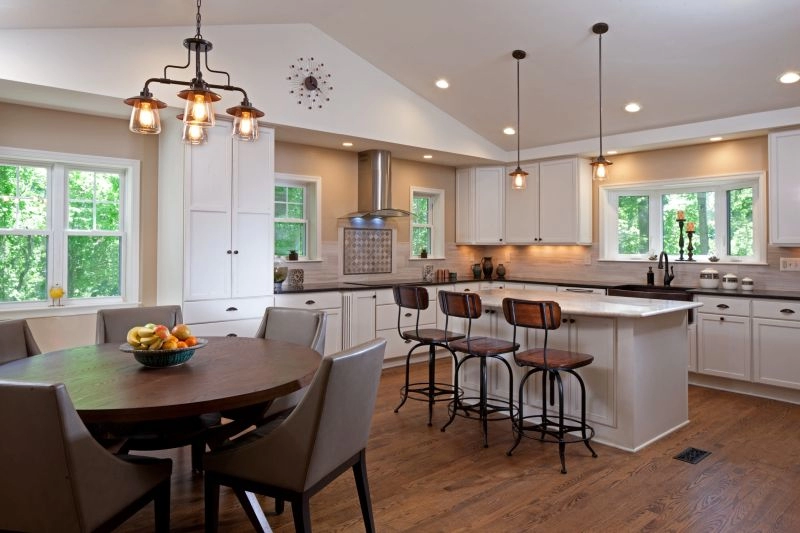
Laminate is thicker, 6 to 12 mm according to Angi, so it feels firm and solid underfoot and closer to real wood. Vinyl plank averages about 5 mm and ranges from stiff to slightly soft depending on the core. Rigid-core vinyl feels more like laminate than older flexible vinyl did.
Both are floating floors, so the underlayment matters for sound. A good underlayment cuts the hollow sound when you walk across the room, and in condos and apartments the building often sets a minimum sound rating. Either floor can look convincing today; higher-end products of both types use deeper embossing that follows the printed grain.
Neither one adds resale value the way hardwood or natural stone can, Angi notes, though both are an upgrade over worn carpet or dated sheet vinyl.
Basements deserve a closer look. A below-grade slab can carry moisture even when it looks dry, so we test it before recommending any floor. Vinyl plank tolerates that environment far better than a fiberboard core. Our guide to basement finishing in Maryland covers moisture control, egress and permits for the rest of the project.

Many houses around Baltimore were built decades ago, and the floor you see is rarely the first one. A few things come up again and again when we install laminate or vinyl plank:
Our flooring installation team checks these during the in-home visit. We install both floors across the area, including flooring in Towson, Owings Mills and Pikesville, often as part of a larger kitchen or basement remodel.
Wall to Wall Construction installs laminate, luxury vinyl plank, hardwood and tile across Central Maryland. We will look at your subfloor, bring samples and give you a clear, itemized estimate. Prefer to write? Use our contact page.