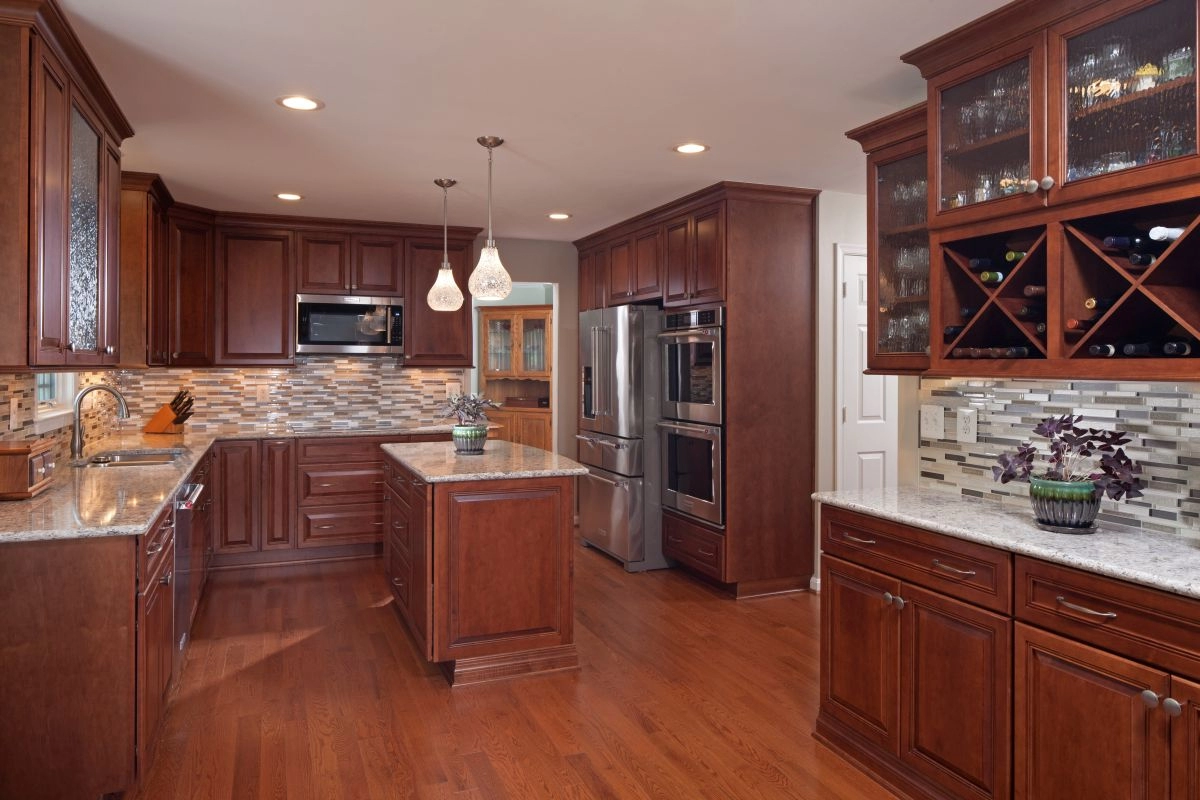
The 2025 Cost vs. Value Report puts a midrange minor kitchen remodel at about $28,458, a midrange major remodel at about $82,793 and an upscale major remodel at about $164,104 (national averages). Angi’s figures, as reported by NerdWallet, put the average kitchen remodel around $27,000, with most homeowners spending $14,600 to $41,600. Where a Maryland kitchen lands depends on whether you keep the layout, what happens to the cabinets and what is behind the walls. Treat every number here as a planning range, not a quote.
“What will this cost?” is the first question almost every homeowner asks about a kitchen, and the honest answer is a range wide enough to be frustrating. A refresh that keeps the cabinets in place and a full gut with a new layout are both called a kitchen remodel, yet one can cost several times the other. This guide walks through published cost data, what each budget level gets you, what pushes the price up in Baltimore County, Howard County and Anne Arundel County homes, and how to set a realistic number before you talk to a contractor.
The most widely cited source is the annual Cost vs. Value Report, which prices the same defined projects every year. Its 2025 national averages for kitchens are:
| Project (2025 Cost vs. Value) | Average job cost | Cost recouped at resale |
|---|---|---|
| Minor kitchen remodel, midrange | $28,458 | 112.9% |
| Major kitchen remodel, midrange | $82,793 | 50.9% |
| Major kitchen remodel, upscale | $164,104 | 35.7% |
NerdWallet’s January 2026 kitchen cost guide pairs those figures with Angi’s data: an average of around $27,000, with most homeowners spending between $14,600 and $41,600. The two sources measure different things. Angi reflects what homeowners report paying across all kinds of kitchen projects, while Cost vs. Value prices specific project scopes, which is why the major remodel numbers run much higher.
The Cost vs. Value project descriptions are useful because they spell out what is included at each level.
Most Maryland projects sit somewhere between the first two cards. Homeowners often keep the footprint but replace every cabinet, or keep most cabinets and move the sink to a new island. Where your plan falls on that spectrum matters more than the size of the room.
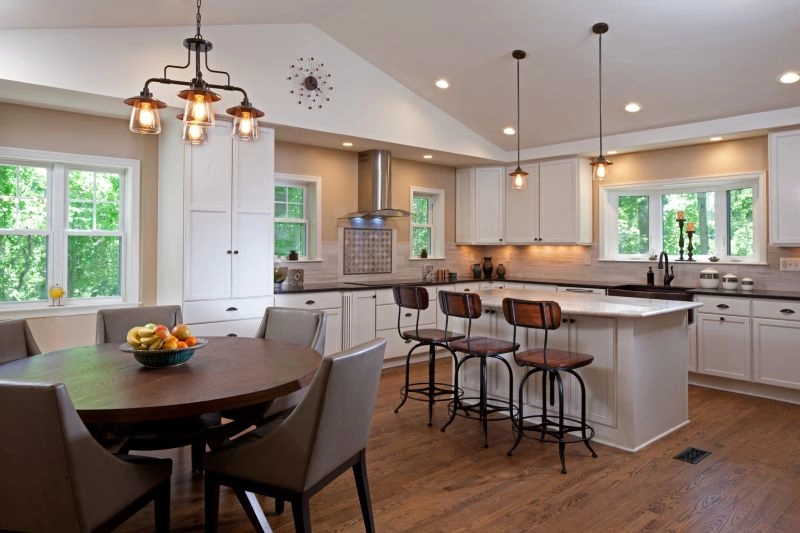
Cabinetry is the biggest single expense in most kitchens. Stock, semi-custom and custom lines differ in construction, sizes and finish options, and the jump between them is significant. Keeping sound boxes and changing only the doors is the largest single saving available.
Moving the sink, range or refrigerator means new plumbing, gas or electrical runs. Taking out a wall adds structural work: confirming whether it is load-bearing, sizing a beam, rerouting anything inside the wall and patching the floor and ceiling. Keeping the work triangle where it is keeps cost down.
Laminate is the budget option. Quartz and granite cost more, and price rises with the slab, edge profile, number of seams and cutouts. Full-height tile backsplash costs more than tile to the bottom of the upper cabinets.
Appliances range from basic packages to professional-style ranges and panel-ready refrigerators. Changing appliance sizes can also change cabinet dimensions and electrical needs, so choose them before the cabinet design is finalized.
Modern kitchens need dedicated circuits for appliances, plus recessed, under-cabinet and pendant lighting. A range hood vented to the outside adds ductwork. Older homes may need a panel upgrade to carry the new load.
In older Catonsville, Towson and Ellicott City homes, opening the walls can reveal outdated wiring, old plumbing or framing that has to be corrected before the new kitchen goes in. Newer homes tend to hold fewer surprises. A good proposal carries allowances for what cannot be seen until demolition.
If a wall comes out, the new floor usually has to run continuously through the opened space, which can mean flooring a larger area than the kitchen itself. Our flooring installation team often handles this as part of the kitchen job.
Because cabinets drive so much of the budget, this decision shapes the whole project:
A contractor should check the condition of the boxes before you decide. Refacing damaged cabinets only hides a problem you will pay to fix later.
Permits are issued by the county. Work that changes electrical, plumbing, gas or structural elements generally needs a permit and inspections, which covers most full kitchen remodels. Baltimore County handles this through the Department of Permits, Approvals and Inspections, Howard County through the Department of Inspections, Licenses and Permits, and Anne Arundel County through Inspections and Permits. A cosmetic refresh with no changes to those systems may not need one, but confirm with your county before work starts.
Also check for HOA rules if any exterior change is involved, such as a new window, a vent through the wall or a bump-out. A design-build contractor should prepare the drawings, file the permit and schedule inspections as part of the job.
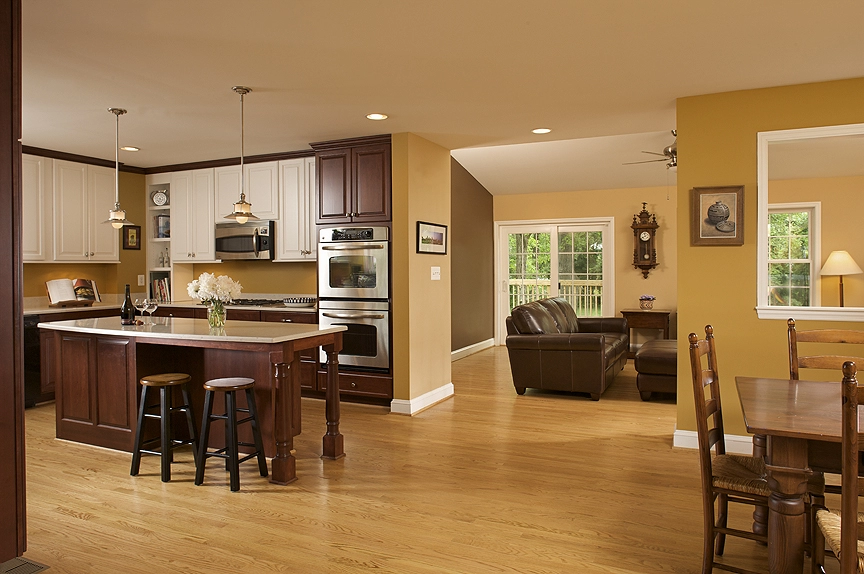
In the 2025 Cost vs. Value data, the midrange minor kitchen remodel recouped 112.9% of its cost at resale, while the midrange major remodel recouped 50.9% and the upscale major remodel 35.7%. In other words, a focused update returns more of its cost at sale than a full luxury kitchen. If you plan to sell soon, that is a strong argument for a refresh. If you plan to stay for years, how well the kitchen works for your family every day may matter more than resale math.
For more ideas on storage within any budget, see our walk-in pantry ideas.
Wall to Wall Construction designs and builds kitchens across Central Maryland through our kitchen remodeling team, including in Catonsville, Ellicott City, Columbia and Towson. We will look at your kitchen and give you a clear, itemized estimate.