Usually, yes. Baltimore County requires a building permit for a deck that is more than 16 inches above the lowest grade and larger than 120 square feet, and for any deck, whatever its size, in a historic district, on the county landmarks list, in a floodplain or in the Chesapeake Bay Critical Area. In Baltimore City, the housing department’s rule of thumb is that alterations require a permit while ordinary maintenance repairs generally do not, and rooftop decks need drawings sealed by a Maryland-licensed architect or engineer. Enclosing a porch or deck is treated as an addition.
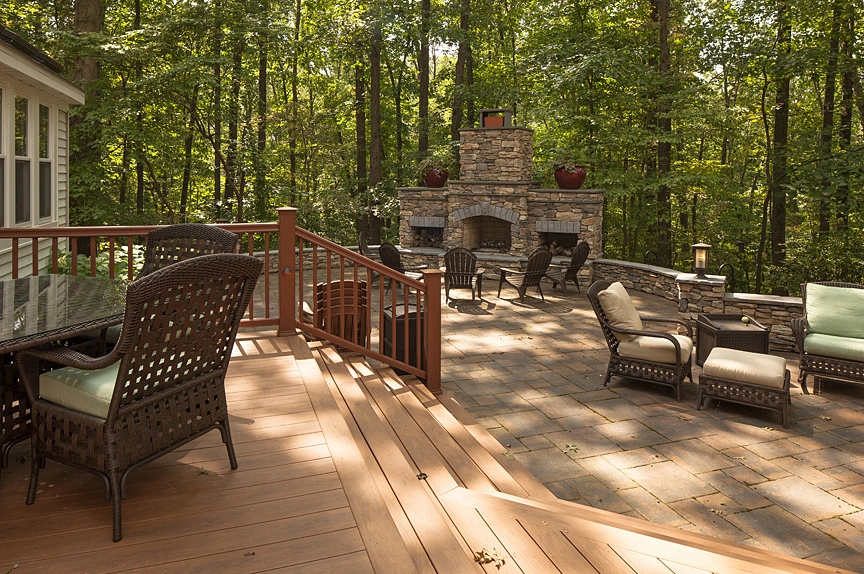
A new deck is one of the most common outdoor projects around Baltimore, and one of the most common questions we hear before a project starts is whether it needs a permit. The answer depends on two things: which jurisdiction your house is in, and what you are building.
This guide sums up what the Baltimore County and Baltimore City permit offices publish about decks, porches and rooftop decks. Rules change, and your lot may have conditions this guide cannot see, so always confirm with the permit office for your address before you build.
Baltimore City and Baltimore County are separate governments with separate permit offices. Catonsville, Towson, Parkville and Pikesville are in Baltimore County, while neighborhoods such as Canton, Hampden and Roland Park are inside the city limits. Some county homes still use a Baltimore mailing address, so check your property record rather than the envelope.
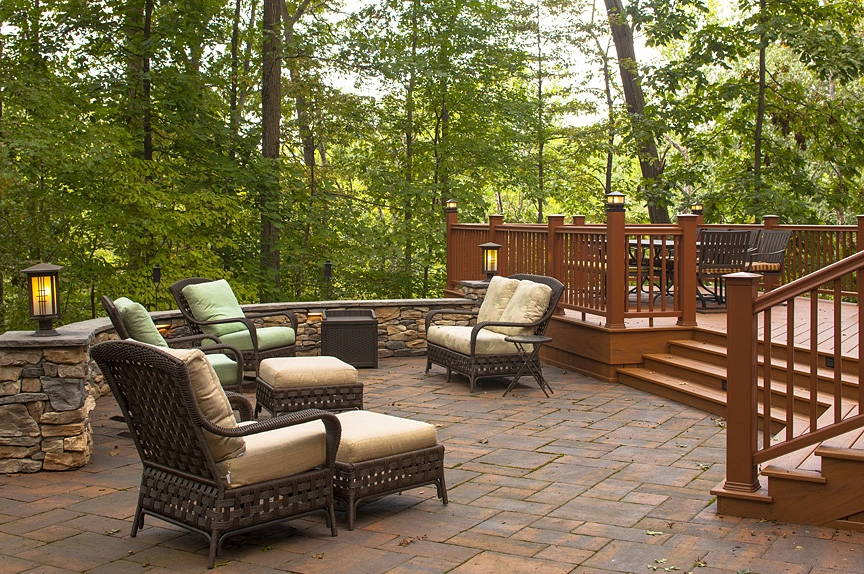
Baltimore County’s deck permit page states that a building permit is required for decks greater than 16 inches above the lowest grade and exceeding 120 square feet. A small, low deck can fall under that line. Size and height are not the only test, though. The county requires a permit for all decks, regardless of size, in these locations:
| Situation | Permit required? |
|---|---|
| Deck more than 16 in. above the lowest grade and larger than 120 sq. ft. | Yes |
| Any deck in a proposed or designated Baltimore County Historic District | Yes, regardless of size |
| Any deck on a property on the Baltimore County Landmarks List | Yes, regardless of size |
| Any deck in the floodplain | Yes, regardless of size |
| Any deck in the Chesapeake Bay Critical Area | Yes, regardless of size |
The paperwork scales with the size of the deck. According to the county’s deck permit page:
Applications are filed online. The county also publishes deck construction guidelines. If a contractor is doing the work, the county states that residential alterations or additions by a private contractor require that contractor’s Maryland Home Improvement license number.
Adding a roof, screens or windows changes how a project is reviewed. Baltimore County requires a permit for making a weatherproof enclosure of an existing porch or deck, including in historic areas, and it considers that enclosure an addition because it extends the indoor area of the house. That has a practical effect: the enclosed space is subject to the same setback limits as the house itself. A deck that sits close to a property line may not be a candidate for a three-season room, even if the deck itself was legal.
In county historic districts, a permit is required for any work that affects the exterior appearance, including repair or removal of any part of the house, fence or accessory structure.
A roof also adds load, so the existing footings, posts and beams need to be checked first. If you are weighing a screened porch, our guide to screened porch costs in Maryland covers published price ranges, and from deck to sunroom walks through turning a deck into a year-round room.
Baltimore City does not publish a single height-and-size threshold for decks the way the county does. DHCD’s list of work that does not need a permit opens with the general rule: alterations require a permit, but ordinary repairs that are in fact maintenance generally do not. The same list notes that exterior painting and roof shingle replacement on one- and two-family homes can need a permit when the house is in a CHAP (historic) area, and it says the list is not all-inclusive.
A few other points from the city’s own pages:
Rooftop decks are popular on rowhouses where the yard is small, and Baltimore City’s building code has a section devoted to them. Key requirements from the city’s rooftop deck guideline:
| Requirement | What the city code says |
|---|---|
| Drawings | Must include dimensional setbacks and be signed and sealed by an architect or engineer licensed in Maryland |
| Party walls | If the deck is supported by party walls, the adjoining owners must be notified in writing |
| Height | No more than 2 ft above the plane midway between the lowest and highest points of the roof surface |
| Front setback, flat roof | 8 ft from the face of the building wall |
| Front setback, gabled or mansard roof | 6 ft behind the ridge line |
| Side and rear setbacks | None in the building code, but any greater zoning or urban renewal setbacks also apply |
Replacing a few rotten boards is usually treated differently from tearing out a deck and building a new one. In the city, ordinary maintenance repairs generally do not need a permit. A full replacement, a bigger footprint or a new roof is a different project, so ask the permit office before you assume a “repair” is exempt.
Whoever builds it, the contractor should be licensed. The Maryland Home Improvement Commission says installing patios and retaining walls at a residence counts as home improvement, and the commission’s website has a license search you can use to look up any contractor before you sign. In Baltimore County, the contractor’s license number goes on the permit application.
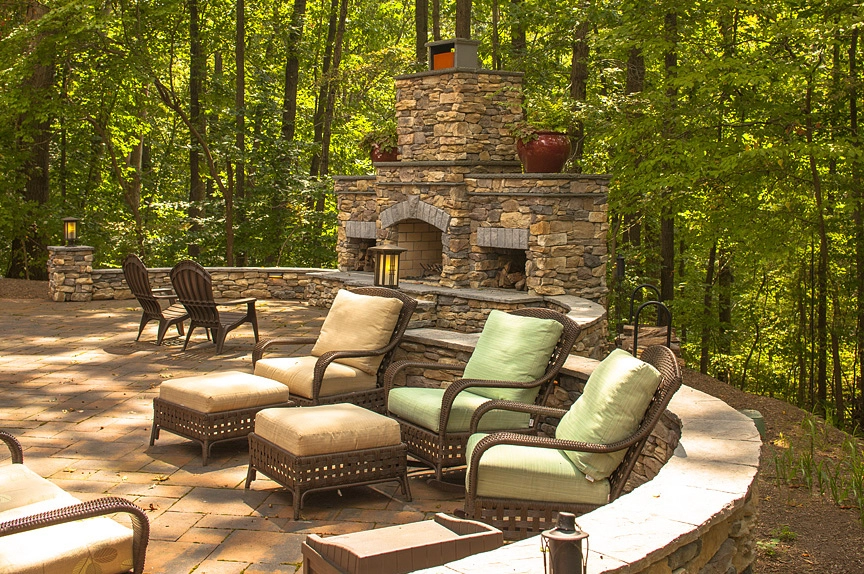
Wall to Wall Construction designs and builds decks, porches and outdoor spaces across Maryland, including in Catonsville and Towson. We handle the drawings and permits and give you a clear, itemized estimate.